Bugatti
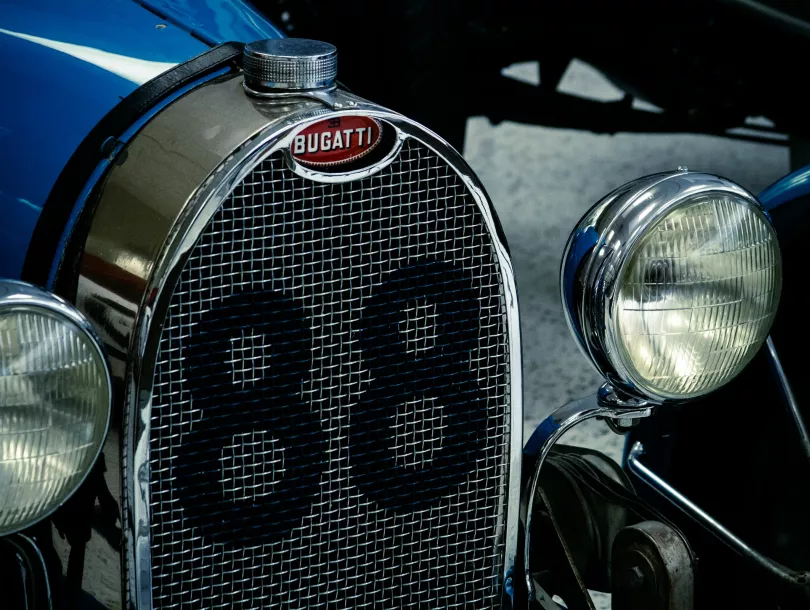
Bugatti was founded in 1909 in Molsheim, Alsace (then Germany, now France), by Italian-born constructor Ettore Bugatti. The automaker built its early reputation on lightweight chassis design and Grand Prix racing dominance, led by the Type 35, which won over 2,000 races during the 1920s and 1930s. Following decades of inactivity after the post-war era, Volkswagen Group acquired the rights to the brand in 1998, building a new assembly atelier back in Molsheim.
Models over time
Bugatti EB110
Bugatti Veyron
Bugatti Chiron
Bugatti Divo
Bugatti La Voiture Noire
Bugatti Centodieci
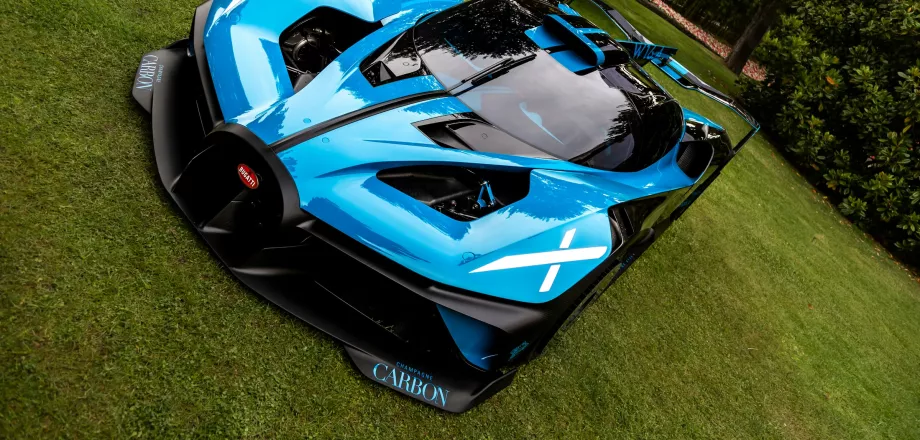
Bugatti Bolide
Bugatti W16 Mistral
Bugatti Tourbillon
Selected cars
Related articles
Data
Registration
Official recall campaigns.
Facts
Removing the roof required the Mistral’s monocoque to be extensively reengineered rather than simply cutting the top from a Chiron structure.
At full load, the two large intakes behind the headrests can feed the Mistral’s engine about 70,000 litres of air per minute.
Bugatti engineered the W16 Mistral to reach 420 km/h in Top Speed mode.
The Mistral uses an 8.0-litre quad-turbo W16 engine producing 1,600 PS.
The Veyron uses permanent all-wheel drive to put the W16 engine’s power onto the road.
The Veyron transmits its power through a seven-speed dual-clutch gearbox.
Bugatti quoted a 0–100 km/h time of 2.5 seconds for the Veyron 16.4.
The Veyron 16.4 engine delivers 1,250 Nm of torque from 2,200 to 5,000 rpm.
The original Veyron 16.4 produced 1,001 PS, surpassing the 1,000-horsepower threshold in a series-production road car.
The Veyron 16.4 uses an 8.0-litre W16 engine with four turbochargers.
More facts about Bugatti
Showing 1–10 of 90 facts